
Jungle Safari & Cultural Village Tour – Parsa National Park

Jungle Safari & Cultural Village Tour – Parsa National Park

3 Nights / 4 Days

Parsa Wildlife National Park is located in the southern Terai lowlands of Nepal, spanning across Parsa, Makwanpur, and Bara districts. It covers approximately 637 square kilometers and was declared a national park in 2017, having previously been a wildlife reserve since 1984. The park is contiguous with Chitwan National Park to the west and forms part of a larger protected landscape.

Jungle safaris in Parsa are less developed and commercialized than neighboring Chitwan, offering a more remote wilderness experience.
Day 1 — Pokhara to Amlekhgunj | Arrival & Welcome
The journey begins morning around 8am from Pokhara, boarding a comfortable tourist bus along the Prithvi and Mahendra highways. The roughly 6 hour drive rolls through the Terai flatlands as the landscape shifts from mountain foothills into the lush, warm lowlands of the inner Terai. Arrival at Amlekhgunj by afternoon.
After checking into the resort on the fringes of Parsa National Park, the afternoon is kept light — a short orientation walk around the resort grounds, a briefing from your guide about the park’s wildlife rules.

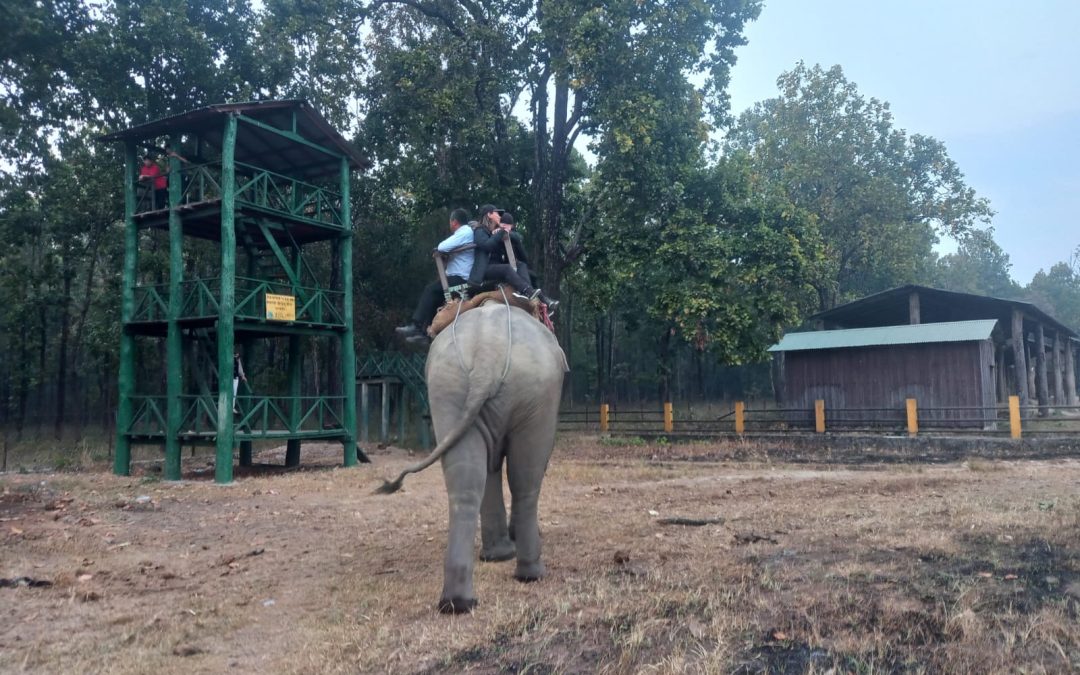
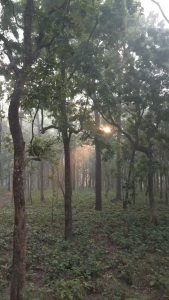
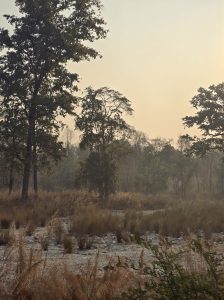
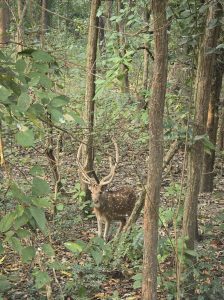
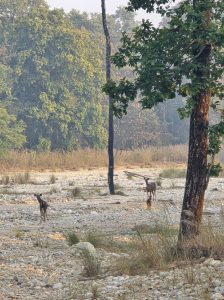
Day 2: Early morning around 6:30, we went to National park for elephant ride. It was beautiful morning, great Sun light. The color of jungle was vibrant and magnificent with the morning light. We spotted few Nilgain( Blue bull), samba deer. As we were waiting near pond, the bunch of spotted deer came to drink water. It was beautiful sight to see. We ride deeper into the jungle, the experience was adventurous. We ride for 3 hours.
Around 10:30am, We reached hotel and had a breakfast and went for hiking to Siddha Baba temple, which is one of the sacred place. It was total of about 2 hours walk by the dry riverside and inside the jungle, where it brings joy on bird watching session in the late morning. Parsa is home to over 300 bird species, and February sits at the heart of the winter migratory season. We hike up to the hill, from top we can see 360° view of Amlekhgunj, Parsa.
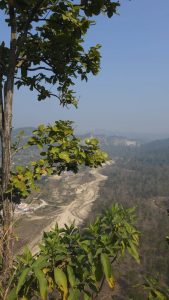
After the hike, we came down to hotel for lunch and rest for a while and also get excited for the evening elephant ride. Around 4:00pm, We went to Parsa National Park for our evening elephant ride. Late afternoon is when the wildlife is more active and chances to see more animals. We saw spotted deer, peacock, wild chicken, Nilgain( Blue bull. We even went to see man eaten tiger which was caged inside the Parsa National Park. The tiger has been recently caged as he had killed 4 human near the forest. As a consequence, nature walk around buffer area has been stopped for a while.
We visit elephant breeding center, learn about elephant conservation efforts, observed elephants during feeding time. We also get a chance to feed their favorite snack. Overnight Amlekhgunj.


Day 3: Today is the day for Jeep safari. We went to National Park early morning. We took a permit and ready for our 4WD jeep safari with experienced guide. The morning begins with a jeep safari through the sal forest and grassland corridors that Parsa is known for. Unlike its more famous neighbor Chitwan, Parsa retains a raw, uncrowded wilderness.
February mornings in Parsa are cool and misty — perfect for wildlife. As we enter the park, we spotted bunch of spotted deer which is called chital in Nepali. During our morning ride, we saw samba deer, spotted deer, wild boar, wild chicken, peahen.
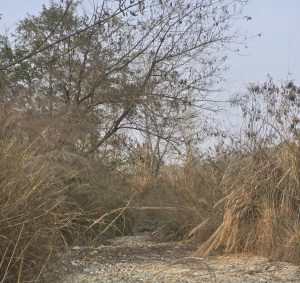
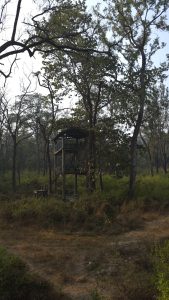
We stop at machan (elevated watch platform) for bird watching. We had a coffee break on a machan overlooking a watering hole — a quiet, breathtaking minutes where patience was rewarded. Around 11pm, we had our late breakfast nearby dry riverside where there was a Hattisar(elephant shelter). We were also able to spot various birds. After breakfast, we hike into the forest where there is a temple called Dhudheshwore mandir, a shiva temple. While walking through the forest trail, we spotted many langoors over the trees. We also saw crocodiles by the pond basking on the sun.
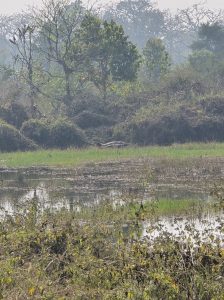
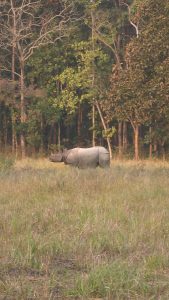
After the walk, we continued our jeep safari till late afternoon, when we were lucky enough to spot one horn rhino in the grassland with sunset backdrop. It was always overwhelm to witness a unique animal. Return to the resort by dusk for a hot shower, dinner, and campfire conversation about the day’s sightings. Overnight Amlekhgunj.

Day 4 — Departure | Amlekhgunj to Simra Airport to Kathmandu
After a final breakfast, bags are packed and the vehicle departs for Simra Airport, roughly 20–30 minutes from Amlekhgunj.
The domestic terminal at Simra is small and unhurried. Check-in is quick, and the short 20-minute flight to Kathmandu. Overnight KTM.

Best Season to Visit
The ideal time to visit Parsa is October to March (autumn and winter).
During these months: Weather is pleasant with clear skies and moderate temperatures.
Wildlife is easier to spot as animals congregate around water sources.
Temperature ranges from 10°C to 25°C

Avoid the monsoon season (June to September) when heavy rains make roads difficult to navigate and many areas become inaccessible. Summer (April-May) can be extremely hot, with temperatures exceeding 40°C.

Parsa is home to diverse fauna including:
Major Mammals:
Bengal tiger
Asian elephant (wild herds)
One-horned rhinoceros (though less common than in Chitwan)
Leopard, Sloth bear, Wild boar
Four species of deer (spotted deer/chital, sambar, hog deer, barking deer)
Blue bull (nilgai), Gaur (wild bison)

Birds: Over 300 species have been recorded, including peacocks, hornbills, parakeets, woodpeckers, and various waterfowl.

Reptiles: Gharial crocodile, marsh mugger crocodile, and various snake species.

Vegetation
The park features tropical and subtropical forests with distinct zones:

Sal forests: Dominated by sal trees (Shorea robusta), covering most of the park
Mixed hardwood forests: Including species like Terminalia and Lagerstroemia

Riverine forests: Along watercourses with silk cotton trees

Grasslands: Patches of tall elephant grass (saccharum spontaneum)
Khair-sissoo forests: In riparian areas

The park contains over 800 plant species, including medicinal plants traditionally used by local communities.


The Ultimate 14-Day Kala Patthar Trek: Your Journey to Everest’s Iconic Viewpoint.

The Ultimate 14-Day Kala Patthar Trek: Your Journey to Everest’s Iconic Viewpoint.

Standing at 5,643 meters (18,514 feet), Kala Patthar offers one of the most spectacular panoramic views of Mount Everest and the surrounding Himalayan giants. This comprehensive 14-day itinerary takes you through the heart of the Khumbu region, allowing proper acclimatization while immersing you in Sherpa culture and breathtaking mountain scenery.


Why Trek in October-November?
October and November represent the prime trekking season in the Everest region. After the monsoon rains subside, you’ll experience crystal-clear skies, excellent visibility, and stable weather conditions. The post-monsoon period offers the clearest mountain views of the year, with daytime temperatures that are comfortable for trekking and the trails adorned with vibrant rhododendron forests.


Detailed 14-Day Itinerary
Day 1: Arrival in Kathmandu (1,400m / 4,593ft)
Altitude: 1,400m
Weather: Pleasant, 15-25°C during day.
Arrive in Nepal’s capital city and transfer to your hotel. Use this day to rest, meet your trekking team, and complete any last-minute preparations. A pre-trek briefing will cover essential safety information and what to expect in the coming days.

Day 2: Kathmandu to Lukla Flight & Trek to Phakding (2,610m / 8,563ft)
Altitude: 2,610m
Trekking Time: 3-4 hours
Weather: Cool and pleasant, 10-18°C
The adventure begins with an exhilarating 35-minute mountain flight to Lukla’s Tenzing-Hillary Airport. From Lukla, descend through pine forests alongside the Dudh Koshi River to reach Phakding. This gentle first day helps you adjust to the altitude and trekking rhythm.


Day 3: Phakding to Namche Bazaar (3,440m / 11,286ft)
Altitude Gain: 830m
Trekking Time: 5-6 hours
Weather: Cool, 5-15°C
Cross multiple suspension bridges decorated with prayer flags as you follow the Dudh Koshi River. After entering Sagarmatha National Park, tackle the steep climb to Namche Bazaar, the bustling Sherpa capital. If weather permits, you’ll catch your first glimpse of Everest on this ascent.

Day 4: Acclimatization Day in Namche Bazaar
Altitude: 3,440m
Activity: Day hike to Everest View Hotel (3,880m), Sherpa Culture Museum.
Weather: Cool mornings (0-5°C), warmer afternoons (10-15°C)
Proper acclimatization is crucial for trek success. Hike up to the Everest View Hotel for stunning panoramas of Everest, Lhotse, and Ama Dablam, then return to Namche to sleep at a lower altitude. Explore the local market and visit the Sherpa Culture Museum.


Day 5: Namche Bazaar to Tengboche (3,860m / 12,664ft)
Altitude Gain: 420m
Trekking Time: 5-6 hours
Weather: Cool, 3-12°C, possible afternoon clouds
Traverse through rhododendron and juniper forests with spectacular mountain views. The trail descends to the Dudh Koshi River before climbing to Tengboche, home to the region’s largest monastery. Attend the evening prayer ceremony if timing allows.

Day 6: Tengboche to Dingboche (4,410m / 14,468ft)
Altitude Gain: 550m
Trekking Time: 5-6 hours
Weather: Cold, 0-10°C, very dry air
Descend through alpine forests to Debuche, then follow the Imja River valley with views of Ama Dablam dominating the landscape. The vegetation becomes sparser as you enter Dingboche, a summer settlement with stone-walled fields.


Day 7: Acclimatization Day in Dingboche
Altitude: 4,410m
Activity: Hike to Nangkartshang Peak (5,083m)
Weather: Cold mornings (-5 to 0°C), milder afternoons (5-10°C)
Another essential acclimatization day. Hike to Nangkartshang Peak for 360-degree views of Makalu, Lhotse, and the Ama Dablam massif. This high-altitude exposure helps your body produce more red blood cells before the final push to Everest Base Camp.


Day 8: Dingboche to Lobuche (4,940m / 16,207ft)
Altitude Gain: 530m
Trekking Time: 5-6 hours
Weather: Very cold, -5 to 8°C, strong winds possible
The landscape becomes increasingly barren and dramatic. Pass the memorial site for climbers who perished on Everest before reaching Lobuche. The air is noticeably thinner, and you may experience mild altitude symptoms.

Day 9: Lobuche to Gorak Shep (5,164m / 16,942ft) to Everest Base Camp (5,364m / 17,598ft)
Altitude Gain: 424m
Trekking Time: 7-8 hours
Weather: Extremely cold, -10 to 5°C, windy conditions

Trek to Gorak Shep, drop your bags, then continue to Everest Base Camp. Walk on the Khumbu Glacier surrounded by ice pinnacles and prayer flags. Return to Gorak Shep for the night, as sleeping at EBC is not permitted.


Day 10: Gorak Shep to Kala Patthar (5,643m / 18,514ft) to Pheriche (4,371m / 14,340ft)
Maximum Altitude: 5,643m
Trekking Time: 7-8 hours
Weather: Frigid summit conditions (-15 to -5°C), warmer lower down

Start before dawn for the demanding climb to Kala Patthar. Watch the sunrise illuminate Everest, Nuptse, and Changtse in golden light. The 360-degree panorama is the trek’s pinnacle moment. Descend to Pheriche, dropping significant altitude for better recovery.


Day 11: Pheriche to Namche Bazaar (3,440m / 11,286ft)
Altitude Loss: 931m
Trekking Time: 6-7 hours
Weather: Noticeably warmer, 5-15°C

Retrace your steps downhill through Pangboche and Tengboche. The lower altitude will make breathing easier, and you’ll notice the vegetation returning. Celebrate your achievement in Namche Bazaar with your trekking team.

Day 12: Namche Bazaar to Lukla (2,860m / 9,383ft)
Altitude Loss: 580m
Trekking Time: 6-7 hours
Weather: Pleasant, 8-18°C

The final trekking day follows the Dudh Koshi River back to Lukla. Pass through familiar villages and reflect on your journey. Celebrate with your crew in Lukla, as this is traditionally when you tip and thank your guides and porters.


Day 13: Lukla to Kathmandu Flight
Flight Time: 35 minutes
Weather in Kathmandu: Warm and pleasant, 15-25°C

Early morning flight back to Kathmandu (weather dependent). Spend the afternoon shopping for souvenirs in Thamel, getting a massage, or visiting UNESCO World Heritage Sites. Enjoy a celebratory farewell dinner with your team.

Day 14: Departure from Kathmandu
Activity: Airport transfer

Final day for last-minute shopping or sightseeing before your international departure. Your trek to one of the world’s most iconic viewpoints concludes.


October-November Weather Conditions

Temperature Ranges:
Kathmandu: 10-25°C (daytime), 5-12°C (night)
Lower elevations (2,000-3,500m): 5-15°C(day), 0-5°C (night)
Mid elevations (3,500-4,500m): 0-10°C (day), -5 to 0°C (night)
High elevations (4,500m+): -5 to 5°C (day), -15 to -5°C (night)
Kala Patthar summit: -15 to -5°C (dawn)


Weather Characteristics:
Clear skies with excellent visibility (85-90% of days)
Dry conditions with minimal precipitation
Strong winds at higher elevations, especially in afternoons
Morning frost above 4,000m
Intense UV radiation due to thin atmosphere

Essential Packing List for October-November
Clothing Layers:
Base layers (thermal underwear, moisture-wicking)
Insulating layers (fleece, down jacket)
Waterproof and windproof outer shell
Warm trekking pants and shorts
Warm hat, sun hat, neck gaiter
Quality gloves (liner and insulated)

Equipment:
Four-season sleeping bag (-15°C rated)
Quality trekking boots (broken in)
Trekking poles
Headlamp with extra batteries
Sunglasses (UV protection Category 4)
Water purification system

Accessories:

SPF 50+ sunscreen and lip balm
First-aid kit with altitude sickness medication
Camera with extra batteries
Power bank
Toiletries and wet wipes


Physical Preparation

This trek demands good physical fitness. Prepare with:
12 weeks of cardiovascular training (running, cycling, swimming, pilates)
Hiking with a weighted backpack (8-10kg)
Stair climbing or hill training
Core strengthening exercises
Practice hiking consecutive days
Altitude Sickness Prevention

The itinerary includes two dedicated acclimatization days to minimize altitude sickness risk: Namche and Dingboche

Ascend slowly (no more than 500m daily above 3,000m)
Stay hydrated (4-5 liters daily)
Avoid alcohol and smoking
Recognize symptoms: headache, nausea, dizziness, fatigue
Carry Diamox (consult your doctor)
Never ascend with symptoms


Permits Required

Sagarmatha National Park Entry Permit
Khumbu Rural Municipality Permit
Arrange through trekking agency or obtain in Kathmandu

Best Time: Why October-November?
While the trek is possible year-round, October-November offers:

  1. Peak season for mountain visibility
  2. Stable weather patterns
  3. Comfortable trekking temperatures during the day
  4. Clear, crisp mountain views
  5. Vibrant festival season (Dashain, Tihar)
  6. Well-stocked teahouses

Trek Difficulty
Difficulty Level: Challenging to Strenuous
The Kala Patthar trek is considered challenging due to extreme altitude rather than technical difficulty. The highest point exceeds 5,600m, where oxygen levels are approximately 50% of sea level. While the trails are well-established, the thin air, cold temperatures, and long trekking days require mental and physical resilience.

Final Tips for Success

  1. Book flights and permits well in advance during peak season
  2. Allow buffer days for weather-related flight delays
  3. Trek with a reputable company with experienced guides
  4. Invest in quality gear, especially boots and sleeping bag
  5. Purchase comprehensive travel insurance covering evacuation above 6,000m
  6. Start slow and listen to your body
  7. Embrace the journey, not just the destination.

The Kala Patthar trek is more than reaching a viewpoint—it’s an immersive journey through Sherpa homeland, a test of perseverance, and a profound encounter with the world’s highest peaks. With proper preparation and the ideal October-November timing, you’ll experience the Himalayas at their absolute finest.